 NFC Expert
 Devices
The pace of adoption of NFC transceivers in mass-produced devices cannot be called rapid. The first mobile phone equipped with NFC (Nokia 6131) was released back in 2006. Then several more models appeared on the market, but none of them became popular.
A new wave of interest in NFC technology surged only in 2010-2011, when representatives of several major players in the smartphone market began to increasingly mention the prospects of this solution in their presentations. Last year, the lines of many smartphone manufacturers were replenished with models equipped with an NFC transceiver.
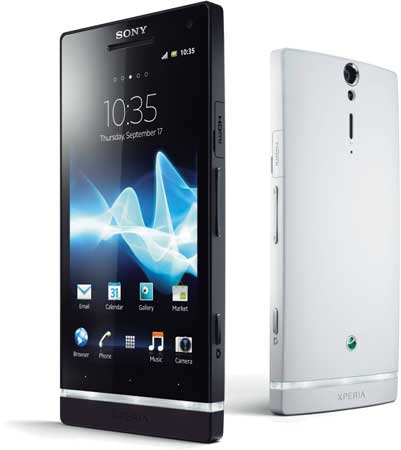
Sony Xperia S is one of the new smartphones with built-in NFC transceiver
Along with smartphones, other types of devices equipped with built-in NFC transceivers have also been released. So, last fall, Harman introduced the JBL PlayUp portable speaker, which was developed with the participation of Nokia specifically for the Lumia smartphone line. Wireless connection of mobile devices to JBL PlayUp is provided by the built-in Bluetooth 2 adapter.
1 EDR supporting A2DP 1.2 and AVRCP 1.4 profiles and NFC transceiver. This, in particular, allows you to play music from devices of the Nokia Lumia series through the JBL PlayUp speakers, simply by leaning your smartphone against the speaker case. The removable 1430 mAh lithium-ion battery powers the JBL PlayUp system in standalone mode.
During CP 2013, Panasonic demonstrated a special modification of the Lumix DMC-TZ40 compact digital camera equipped with an NFC transceiver module. This solution allows you to transfer photos to a smartphone or other device without the use of cables for prompt publication on social networks or uploading to the “cloud” storage.
JBL PlayUp portable speaker is capable of playing audio streaming from Nokia Lumia smartphones via NFC connection
At CES 2013, Sony unveiled the 1TB Personal Content Station hard drive-based home NAS. One of the features of this model is the built-in NFC transceiver, thanks to which the procedure for copying media files from mobile devices to the built-in hard drive is simplified to the limit: to start the process, just put the device on the top panel of the Personal Content Station.
Scope
Of course, users are primarily interested in new opportunities that will appear for owners of mobile devices equipped with a built-in NFC transceiver.
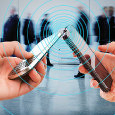
One of the possible options is to transfer files and broadcast a media stream from one mobile device to another in a point-to-point mode. However, due to the low (compared to the same Bluetooth) data transfer rate and short range, NFC is not the best option for performing such tasks.
NFC is enough to transfer text, images and sound recordings, as well as broadcast highly compressed audio streaming. But, for example, the bandwidth will be clearly not enough to transmit a video stream. Thus, in point-to-point mode, NFC is only interesting for transferring small files, and its advantage over Bluetooth lies in a simpler and faster connection establishment procedure.
Perhaps in the future, RFID tags will become as widespread as QR codes
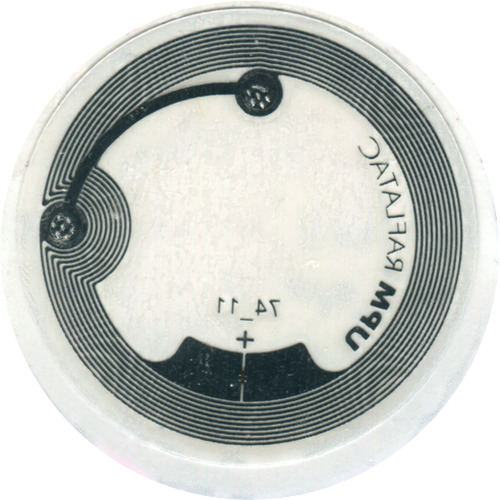
In RFID scanner mode, the built-in NFC transceiver allows you to read information from passive RFID tags. In the future, it is planned to supply advertisements, posters, diagrams, pointers, etc. with such labels. Thus, the user will be able to download information about various events (concerts, festivals, sports competitions, etc.
), promotions and sales in shopping centers and more, as well as get a link to online resources by simply placing your smartphone on the area of the image marked with the corresponding marker. It is easy to see that this method is reminiscent of obtaining information by reading two-dimensional QR codes, which have become widespread in recent years.
It is possible that in the future RFID tags will be widely used in retail. RFID tags attached to the boxes and labels of goods will allow customers to independently obtain certain information. For example, by bringing the smartphone to the packaging, it will be possible to display information about the composition and expiration date of products or medicines.
The main advantages of contactless mobile payment technology are maximum simplicity and time saving
But perhaps the most promising area of application for mobile devices with built-in NFC transceivers is contactless payment systems. The idea is that an NFC-equipped mobile phone in smart card emulation mode can act as a bank card. To pay for goods or services, it is enough to bring the device to the cash terminal equipped with NFC.
According to experts, the introduction of mobile payment systems based on NFC technology will make it much more convenient to make payments when making small payments. Firstly, the user will not need to look for change in his pocket, and secondly, it will take much less time to read the encrypted identification code than to make a cash payment.
The first large-scale project to deploy a contactless payment system based on NFC technology was implemented in Japan in the middle of the past decade by the leading national mobile operator NTT DoCoMo. Following him, the world’s largest payment systems joined the process of introducing promising technology.
Google Wallet service allows you to implement the contactless payment function in devices based on Android OS
It cannot be said that the development of new technologies went smoothly. Specialists of various profiles had to solve many problems, including those related to the compatibility of equipment from different manufacturers. For example, a single protocol for exchanging data between an NFC chip and a mobile phone’s SIM card was only standardized in 2009.
Several years ago, the first attempts to introduce contactless mobile payments were made in our country. For example, in February 2008, a pilot project was launched in Moscow to deploy a fare collection system for surface public transport using a contactless NFC chip built into a mobile phone.
Unfortunately, targeted implementation of such solutions does not contribute to the popularization of the new technology. However, it is possible that the situation will begin to change this year. Now in Russia there is an active development of the infrastructure of the contactless payment system MasterCard PayPass. To date, shops, pharmacies and public catering establishments located in many cities of our country are equipped with terminals that provide contactless payment acceptance.
In May 2012, MTS launched the first comprehensive project in Russia to create a contactless payment system for goods and services based on MasterCard PayPass (to make payments, you need to issue an MTS Money bank card, from which funds will be debited). In December, the MTS 965 smartphone, equipped with a built-in NFC transceiver and all the necessary means for contactless payment for goods and services through MasterCard PayPass terminals, went on sale.
With regard to the prospects for the development of mobile payment infrastructure based on NFC technology on a global scale, one cannot fail to note the increasing activity of Google. In 2010, it acquired Zetawire, a small Canadian company specializing in the development of technologies in the field of mobile payments.
In the future, a smartphone with an NFC chip can replace keys
Considering that in 2012 Android OS occupied three quarters of the market of operating systems for smartphones, the development of the Google Wallet service, coupled with the emergence of a large number of new models equipped with an integrated NFC transceiver, will significantly accelerate the pace of implementation of contactless mobile payment technology and attract to it the attention of many users.
There are a variety of views on the future of NFC-based contactless payment technology. According to the head of the European branch of VISA Peter Ayliffe (Peter Ayliffe), it is this year that this decision will become truly massive. For six years, European countries have been working to deploy the appropriate infrastructure, and in addition, in 2013, a significant increase in the number of bank card issuers that provide the ability to connect to the contactless payment system is expected.
However, not everyone considers the “blitzkrieg” of NFC-based contactless payment systems to be real. For example, employees of the analytical agency Forrester Research gave a rather restrained forecast, saying that this technology could become mass-produced only in 3-5 years.
There are those who predict the imminent decline of NFC-based contactless payment systems. Thus, the president of electronic payment system PayPal David Marcus (David Marcus) believes that the attempt to bring this technology to the mass market is doomed to failure. In his opinion, for the buyer there is no fundamental difference between paying for purchases with a plastic card or a mobile phone with NFC, which means there is no real incentive to switch to new technology.
However, contactless payments are just one of the options for using mobile devices equipped with NFC transceivers. There are other equally interesting possibilities. For example, the smart card emulation mode will in the future make it possible to turn a smartphone into a universal electronic key. With it, it will be possible to open the door to the entrance and to the apartment, go through the electronic access control system to the office and even start the car. It is possible that someday such mobile devices will be able to perform the functions of a universal electronic identity card.

A large-scale demonstration of various use cases for mobile devices with NFC transceivers was organized as part of the GSMA Mobile World Congress (MWC 2013) held at the end of February in Barcelona. Participants and visitors of MWC 2013, who have smartphones with NFC, got a unique opportunity to evaluate the advantages and disadvantages of this technology on their own experience.
By the opening of MWC 2013, more than 20,000 terminals were installed in restaurants, bars, cafes and shops in Barcelona to accept contactless mobile payments. In the halls of Barcelona Airport and the pavilions of the Fira Gran Via exhibition center, informational posters equipped with RFID tags were installed.
A special NFC Badge application, available for devices based on Android 4.x, Windows Phone 8 and BlackBerry 7.1, allowed visitors to turn their smartphone into an electronic pass to enter the territory of the Fira Gran Via exhibition center during the days of MWC 2013.
Competing solutions
Since NFC is not the first short-range wireless interface implemented in mobile devices, it is interesting to compare it with other solutions. At first glance, it might seem that NFC is a direct competitor to Bluetooth. However, with a closer comparison, it is easy to find a number of fundamental differences between these interfaces.
First, NFC only allows communication between two devices that are in close proximity. The range of the most common Bluetooth Class 2 transceivers in the consumer segment is up to 10 m, moreover, several devices can be connected simultaneously through this interface.
Secondly, NFC provides a much faster and easier connection due to the fact that the user does not need to start the search for new devices and enter a pin code. And thirdly, the NFC transceiver allows you to read data from passive RFID tags and work in smart card emulation mode.
A closer competitor to NFC is the TransferJet wireless interface developed by Sony Corporation. Just like NFC, it is designed to link two devices located in close proximity (several centimeters away). The connection is carried out according to the “point-to-point” scheme and is established automatically as soon as the transceiver of one device is in the coverage area of another.
True, the scope of TransferJet is so far limited to exchanging files between two devices, accessing the contents of the memory of a mobile device from a PC and household devices (in particular, Smart TV), as well as printing from mobile devices – that is, tasks to perform which NFC is not quite suitable.
Thus, NFC and TransferJet are not competing, but rather complementary solutions. It is also worth noting that the number of serial devices equipped with the TransferJet transceiver is still small, and many of them are only shipped to the Japanese market. In general, NFC technology is a potentially more versatile solution than TransferJet, and currently has much better support from equipment manufacturers.
Perspectives
It is obvious that the acceleration in the pace of NFC adoption in mobile devices observed over the past two years is, figuratively speaking, an “initiative from above” – that is, not a momentary reaction to market requirements, but a complex of carefully planned and well-coordinated actions of most leading manufacturers . Naturally, the question arises: why is this happening right now?
It is not difficult to find the answer to it by studying the news. Recently, the signs of stagnation are more and more clearly visible in the segments of smartphones and tablets. The current stage of development of these devices can be characterized as a smooth evolution that does not go beyond the growth of quantitative indicators. Instead of dual-core processors, new generation devices will have 4- and 8-core processors (possibly with slightly higher clock speeds);
As the experience of recent years shows, the most effective incentive that encourages the user to buy another device to replace the one purchased just a few months ago is the introduction of qualitatively new functions. That is why manufacturers now need new ideas like air that will allow them to expand the functionality of mobile devices (and preferably in the shortest possible time and at minimal cost) and thereby attract the attention of buyers who are already pretty tired of the endless race of megahertz, inches and megapixels.
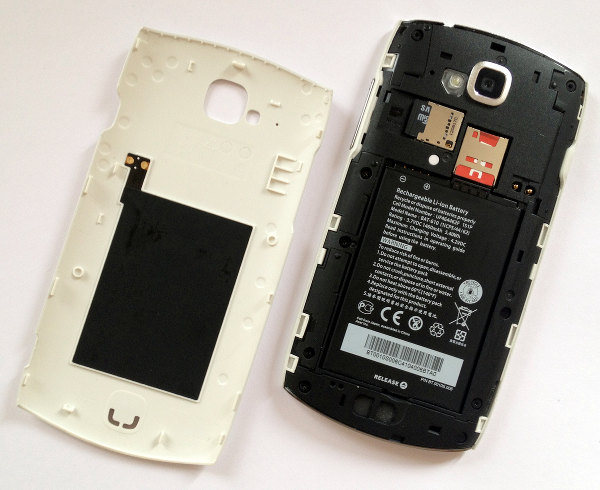
The introduction of NFC will expand the functionality of smartphones (that is, provide much-needed quality growth for the industry) and thus attract interest in new models. From the point of view of manufacturers, the option is very suitable, given that equipping mobile devices with an NFC transceiver does not require large expenses and fundamental changes in the design, and therefore will not lead to a noticeable increase in price.
How successful an attempt to introduce NFC “from above” will be, and whether this solution will become truly massive, depends on many factors. After all, in order to popularize the same contactless mobile payments (on which manufacturers promoting NFC are making the main bet today), it is necessary not only to sell a certain “critical mass” of devices equipped with this function, but also to deploy the appropriate infrastructure.
In addition, it is not yet possible to judge which specific areas of NFC application in mobile devices will be really in demand. Here we can draw an analogy with the process of evolution of functions based on receiving data from built-in GPS receivers. Initially, it was assumed that their scope would be limited mainly to navigation applications and mapping services.
However, the widespread use of devices with built-in GPS receivers (along with the improvement of mobile Internet access) stimulated the development of location-aware data processing technologies, which, in turn, became the basis for the creation of appropriate services (location-based services), applications (location-aware applications) and systems of the so-called augmented (or extended) reality (augmented reality) in mobile devices.
Most likely, something similar will happen with NFC in the future. So far, numerous discussions about the scope and prospects of this interface are nothing more than theoretical calculations. Only the experience of real operation and the reaction of users can confirm or refute them.
https://www.youtube.com/watch?v=85oWPy-vsz4
ComputerPress 03’2013